

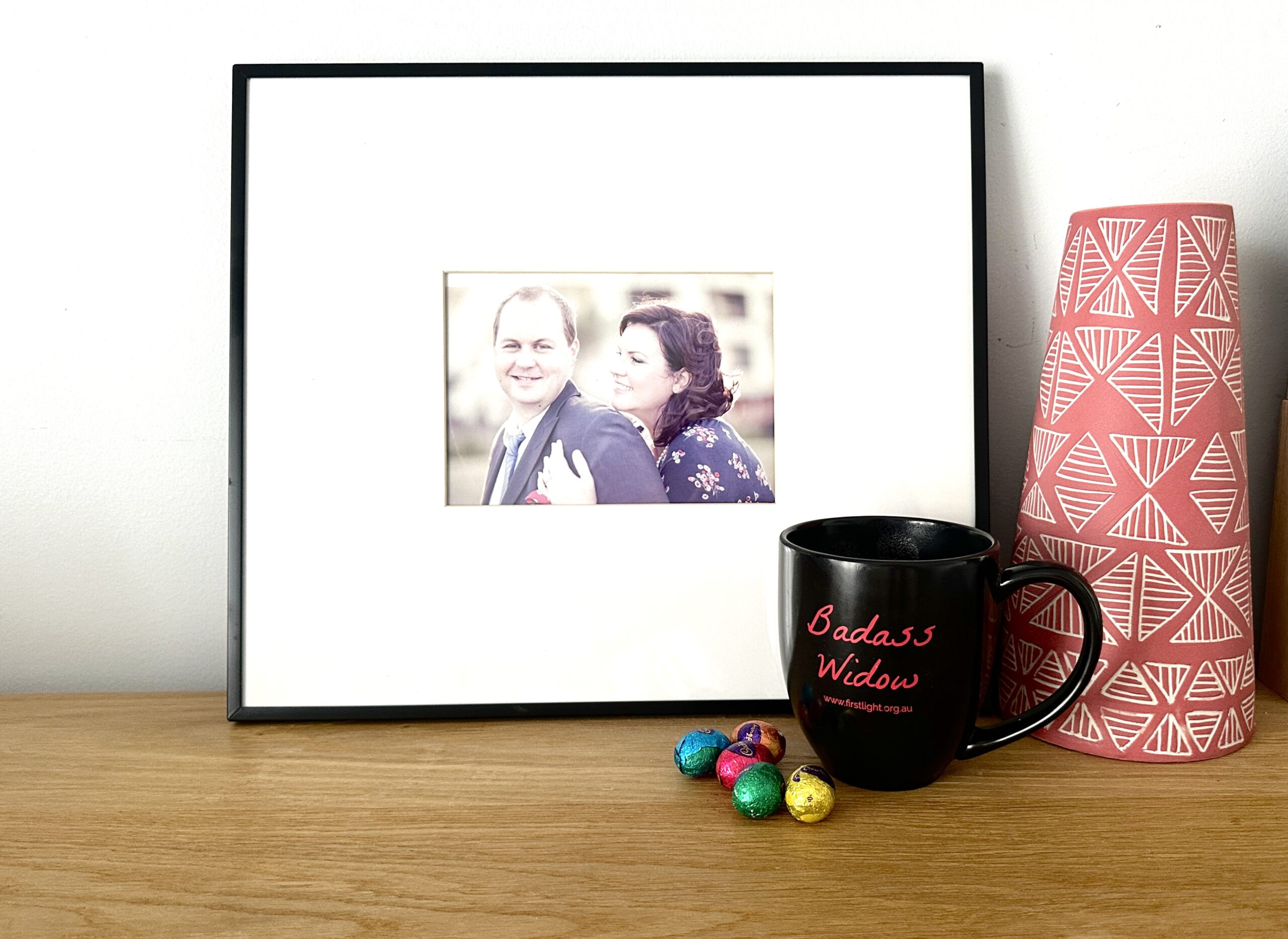
Rebecca Adams, First Light co-founder and CEO
I don’t recall caring much about Easter, before my husband died.
Raised Catholic, I’d grown up marking the religious importance of the holiday and the long-weekend always included a significant injection of chocolate into our house.
Outside of this, it had always just felt like a short but welcome respite from work – four days off that marked the changing of the seasons in Brisbane, and something to look forward to after the post-Christmas / New Year slump.
Our last Easter together, in 2013, a few months before he died, was perfect. We hung out at home, took care of a few jobs we’d been putting off, indulged in chocolate eggs, and spent hours playing card games (we loved a high-stakes game of 500!) with close friends.
It was one of those beautifully simplistic and perfectly sweet memories that were not too remarkable, but stick in my mind as an example of the blissful existence that was life with Dan.
Whether we were off on an adventure (road trip or abroad), or sitting around in our pyjamas watching Entourage, anything we did together felt like I was exactly where I was meant to be – home.
Fast forward a year and I’d grown to dread the weekends, especially long weekends. Any extended time alone in our house stretched into a suffocating eternity of despair and isolation. Yet, the thought of making plans, even with close friends or family, filled me with exhaustion and somehow left me feeling even more lonely.
Every day sucked, let’s be honest, but the routine of ordinary days at least offers distraction. Work, errands, obligations all provide structure and, somehow, a temporary reprieve from the constant undercurrent of loss.
But long weekends strip away that structure. Suddenly, there are hours, then days, with nothing to interrupt the loneliness.
The silence becomes more noticeable. The empty side of the bed feels wider. The absence at the dinner table becomes undeniable. Time without commitments, which was once scarce and valuable, now stretches in a way that feels almost cruel.
I don’t remember much about how I spent that first Easter. The days and nights blurred together.
I know I didn’t spend the whole four days alone, my family were wonderful like that. I was included and they were magnificent at holding space for me, however I showed up.
(I didn’t realise until much later, when I’d met so many other young widows, how lucky I was in that sense. So many of my widowed friends did not experience the unconditional acceptable of grief that my family provided me with.)
But while the specifics of how I passed the time are foggy, the intensity of the pain I carried with me is still searingly sharp, many years later.
By my second Easter long weekend, I was better prepared. I spent the entire four days on the lounge, binge-watching the first four seasons of Game of Thrones. Loved ones popped in to check on me, and sat in on an episode or two (one kindly bought me an A3 print out of the Stark / Lannister / Targaryen family tree, to help me keep up!). But I was unapologetic in my plan to hide from the world, rest and do absolutely nothing.
I was slowly learning that my grief came in waves and I didn’t need to make excuses to do whatever it took to keep my head above the surface.
Today, almost 13 years since I lost my beautiful husband Dan at the tender age of 33 (me, he was 34), my Easter looks different.
Today, Good Friday, I’m wrapping gifts and making a birthday cake for my eldest son who turns 8 tomorrow. Then, hosting family for lunch and an epic Easter egg hunt on Sunday.
I’m also, as ever, holding Dan in my heart. Remembering him. Missing him. Feeling sad about the moments (both remarkable and magically mundane) he’s missing out on.
As a seasoned widow, the pain of losing him will always be with me but I have grown stronger at carrying it. I generally cope with the grief tsunamis better now.
Finally, I ask you to join me in holding our widowed community in your heart. So many of our members are hurting today and feeling anxious about heading into this lonely stretch of days. I ask them to please keep leaning in and reaching out in our online group when you need connection. I hope the passing of time brings you some peace and, one day, you find yourself looking forward to public holidays again, the way I am.

Navigating a Long Weekend Alone: Practical Ways to Cope
There is no way to “fix” grief. But there are ways to move through these long stretches of time with a little more gentleness and support. If you’re facing a long weekend alone, here are some small, practical steps that may help:
1. Lower your expectations
You don’t have to make the weekend meaningful, productive, or even enjoyable. Survival is enough. Taking pressure off yourself can reduce the emotional weight.
2. Create gentle structure
Even a loose plan can help:
- wake up at a set time
- schedule a walk or a coffee
- watch a movie in the afternoon.
Small anchors in the day can prevent time from feeling endless.
3. Limit isolation, even slightly
You don’t have to be social in a big way. Try:
- a short phone call
- a brief visit with someone who feels safe
- texting or chatting online with a friend or fellow widow from our community
- if it’s not too jarring, sitting in a café or park to read a book or take in the atmosphere can remind us that the world is still spinning, even if we’re not ready to engage in it. Being around life, even quietly, can soften the isolation (it’s also ok if you find this feels like too much, and want to go home after ten minutes!).
4. Give space for grief, intentionally
Instead of fighting it all day, set aside time to feel it:
- write to your partner
- look at photos
- sit with memories
Paradoxically, allowing grief in controlled moments can make it less overwhelming overall.
5. Change your environment
If home feels heavy, shift your surroundings:
- go for a drive
- visit the beach or a park
- rearrange a small space in your home.
Even subtle changes can interrupt emotional loops.
6. Create a new, low-pressure ritual
You don’t have to replace old traditions, but you can gently introduce something new:
- a special meal just for you
- lighting a candle in their memory
- watching a familiar comfort show.
Something that acknowledges both loss and continuity.
7. Be Mindful of triggers
Social media, holiday advertising, and other people’s celebrations can intensify grief. It’s okay to step back from these during vulnerable times.
8. Reach out if it gets too heavy
If the loneliness becomes overwhelming, don’t carry it alone:
- call a trusted friend
- connect with our online grief support group
- use a helpline if needed
You deserve support, even if it feels hard to ask for it.